

Laura before facial palsy
After many years of complaining about a problem of fullness in my right ear, it was a shock when I was diagnosed with an acoustic neuroma. I was warned that after the operation I would be deaf in my right ear and that facial palsy could be a risk, but I was totally unprepared for what this might mean or how it would affect my confidence, speech, smile and my eye.
The hospital team was fantastic but there was little understanding of how to deal with facial palsy and I was initially prescribed eye drops with preservatives that caused some problems before I received alternative advice. I received some guidance on how to protect and tape my eye closed but this was limited and I felt at a loss. I was also depressed after my operation but fortunately I had a wonderful GP who gave me anti-depressants, which gave me the impetus to start researching facial palsy and get treatment. My first NHS facial palsy appointment was scheduled for more than 6 months after my operation, but I was anxious to start treatment. Through the Facial Therapy Specialists website, I was able to find out about a Specialist Facial Palsy Clinic in Sussex. I also relied heavily on the Facial Palsy UK website, which is a wonderful resource.
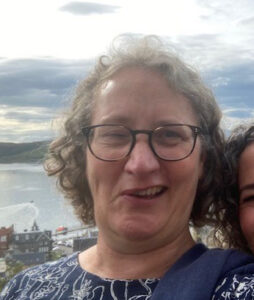
Laura was diagnosed with facial palsy
Following many telephone calls and emails and with the help of my GP I was referred to the specialist clinic and started treatment about 2-3 months after my op, much sooner than the 6 months I was initially told I would have to wait.
It was very much a struggle to find information and guidance and if it hadn’t been for the support of my GP I would not have been able to research and secure the support I needed.
Nevertheless, as soon as I had my first facial palsy physio session at the specialist clinic, I immediately felt relief as I knew what to do and what to expect. I also received so much information on how to care for my eye such as learning about moisture chamber glasses, using a form of cling wrap (from the States!) to tape my eye closed, which type of eye masks to use, etc, etc. Since then I have had regular Botox® treatments and interventions to help with the blink function in my right eye. Whenever I tell somebody that I have a platinum weight in my eyelid they are simply amazed!
I am expecting additional operations as I get older and my face changes but I know that I am in safe hands at this clinic. Obviously, I have good days and bad days but the early intervention I received from specialist facial therapy meant that I achieved fantastic symmetry when my face is at rest, with many people commenting that they didn’t even know I had facial palsy! However, as I start to use my face for talking, laughing etc., my facial palsy is obvious. I worry for individuals who do not have the support to research and seek out treatment.

Laura would like facial palsy to be a recognised disability
My other concern is the availability of medication as I am finding it harder to source preservative-free eye ointment for night time and drops for day time use. Fortunately I receive this on prescription but I frequently have to ask for alternatives as there is no stock. The Facial Palsy UK East Grinstead Support Group is fabulous and members are always ready to offer advice.
I would like to campaign for facial palsy to be a recognised disability. I previously worked in business development and I was unable to return fully to that type of work due to my concerns over my non-resting facial symmetry and speech. Working at a screen for any length of time is very tiring and hurts my eye. Currently I have problems with vision out of my eye on the facial palsy side but the team at the specialist clinic are hopeful that this can be resolved. I also use eye drops around every 30 minutes to 1 hour. I also have to stretch and massage my face daily and of course there are a number of NHS appointments. The mental health challenges faced by people with facial palsy are significant. I am lucky to have a supportive husband, GP and specialist health care team.
Disclaimer: Please note that views expressed are person’s own and should not be considered a recommendation of particular medical treatments, therapies or surgeries. We would always advise you seek advice from a health professional with experience in facial palsy who can assess your individual needs.