
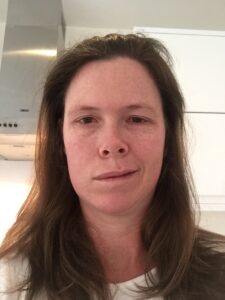
My name is Fiona and I’m 46 years old. I’m Australian, my husband Paul is British, and we have three children (11, 10 and 7). We moved to my husband’s hometown in Surrey almost nine years ago after living and working as a primary school teacher in Singapore. We love being in the great outdoors, and fresh air and exercise are a big part of our life.
My Facial Palsy journey started on January 30, 2017, and I can remember exactly where I was when I started to notice some strange things happening to my face. I was bathing the kids in the evening, and I began to experience a tingling sensation on the right side of my face and down my arm, and my smile looked and felt different. I was concerned so I chatted to Paul, and we decided to call 111. A few hours later we were in A and E at our local hospital, and I was told I had Bell’s Palsy and that the recovery period could be between three weeks and nine months, which came as a huge shock to me.
I was given steroids but not antivirals as I was told they were not giving this as a medication to patients with Bell’s Palsy. We left the hospital and drove home, both of us feeling quite numb. I had to place tape over my right eye so it would close and I could sleep. I continued to do that for quite a while. The next morning, I tried to be as normal as I could around the kids, but I can remember having my shower and just crying. During this time, I felt quite emotional when explaining to people what had happened and why I looked the way I did.

Later that week, I went to the Home Office with one of our Australian friends who was also helping me renew my residency visa. It was quite traumatic as I had to have my photo taken. While I was there, we discovered our youngest son, who had been unwell throughout the week, had chickenpox.
Six weeks later, I was able to see a Facial Palsy specialist at a hospital in Southeast England, thanks to one of the mums at my children’s school who is a physiotherapist, and she told me who to see and where. I am truly forever grateful to her. I went to the physiotherapy department for therapy and was given a range of exercises to do. There were improvements but I continued to have difficulties closing my eye, so I saw an ophthalmologist and over the next few months, we discussed surgical options including placing a platinum chain in my eyelid to enable it to close effectively. I also chose to have reflexology. The reflexologist was able to focus on my eye through my feet. On the day of the surgery, the ophthalmologist came to see me to complete his assessment and was happy to say I could close my eye and I didn’t need it.
Later that year, I saw a consultant at the hospital and explained my timeline of events, and it was on that day I was told I didn’t have Bell’s Palsy, but Ramsay Hunt Syndrome – quite a shock to the system. My journey over the next few months and years was continued therapy, as well as Botox, to help alleviate the symptoms of synkinesis.
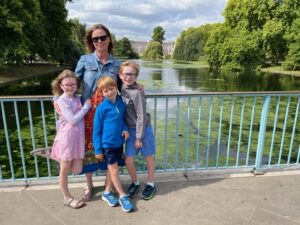
In early 2019, my Facial Palsy specialist gave me some information regarding a possible and beneficial surgery option called Platysmal Neurolysis. In November 2021, Paul and I met with the same consultant I had seen in 2017 to discuss the surgery, and after that meeting, we all agreed it would be a positive next step. In July 2022, I took the next step and had the surgery. I feel incredibly grateful to all the people who have helped me along this unexpected journey, from family and friends to medical professionals.
My advice to anyone in a similar situation would be to talk to others and not hide away, although I can completely understand not wanting to see others. I was fortunate that I had three young children and my husband who I had to keep going for, so I couldn’t let myself avoid social situations. These days I often find myself explaining the difference between Bell’s Palsy and Ramsay Hunt Syndrome to people as it’s something they have never heard of. My hopes for the future are for people with Facial Palsy to receive the right help at the right time, and for continued growth in community understanding of Facial Palsy.
Disclaimer: Please note that views expressed are person’s own and should not be considered a recommendation of particular medical treatments, therapies or surgeries. We would always advise you seek advice from a health professional with experience in facial palsy who can assess your individual needs.