
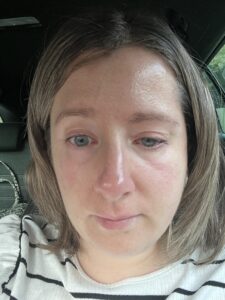
 In 2019, Jess had her fifth surgery on her jaw since she was 15. She woke up from a successful surgery but noticed her eye wouldn’t close and she couldn’t really move her mouth. With an understanding that swelling from the surgery could result in temporary nerve damage, no concerns were raised by her medical team and she went home to recover.
There was no follow-up or safeguarding for managing the swelling and nerve damage. Jess struggled with the dry and gritty feeling, trying to bandage her eye closed to stop the pain. Due to raising concerns about her eye-health, and some online research about facial palsy, she sought advice from her GP who said she may have Bell’s Palsy but that steroid administration was no longer useful so there was nothing to do.
After pushing for more answers, she was referred to the local eye hospital who reassured her the eye was OK, to get some drops to help the dryness, and hope that when the swelling went down everything would be back to normal. Confirmation from her jaw surgeon also suggested that things would resolve in time.
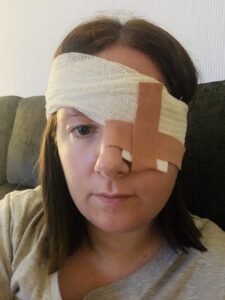
Several months later, however, despite the swelling going down, there was no feeling in the left side of her face, and her eye still didn’t close as it should. Her GP referred her to the facial palsy team at the Queen Victoria Hospital in East Grinstead, and from here things moved very quickly. She was offered facial therapy appointments online, and a little later was introduced to Botulinum toxin.
The emotional implications were significant, with well-intentioned comments such as “it looks fine” and “I wouldn’t have known” feeling dismissive of the journey, and the physical and psychological impact of facial palsy. Jess reiterates that it is not just a visual challenge, it’s physical too: a tightness when she smiles, twitches in unexpected places, and an awful lot of work that has gone into recovery that people do not see. There were conversations at Christmas when she didn’t want to be in photos, and although the pandemic reduced the need for face-to-face contact, Jess’ confidence was knocked significantly.
Throughout this, of course, she also still needed to work. Although symptoms were improving, air conditioning and low ventilation in the office meant her eye was still very painful and dry. A supportive manager ensured work could be split between the office and home, but since changing jobs she is now required to do part-time work only because of the lack of natural light and ventilation in her new office, which has had unexpected financial implications too.
Another surgery
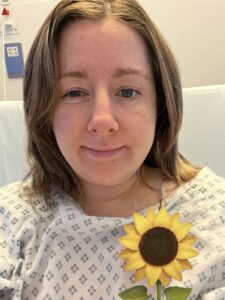
In November 2024, Jess needed more surgery on her jaw and although there remained a risk that the facial palsy would worsen again, the surgery was required. This time she was prepared, knowing that she had found what worked for her: she brought the drops, the tape, the weighted eye masks. The facial palsy recurred, but despite a timely visit to the GP to discuss steroids and further conversations with the hospital, the narrative remained the same: “I’m not sure what to do with you, let’s see what happens.”
Although some avenues had not been particularly supportive, Jess’ facial therapy team were by her side the whole way, offering tailored advice and guidance throughout. Although she needs regular screen breaks and to wear moisture chamber glasses, she has also been supported by her manager to take a very slow return to work.
Today
The facial palsy team have been a fantastic source of support for Jess but work still needs to be done to ensure other healthcare professionals can identify and manage the symptoms of facial palsy. Jess felt the focus always seemed to be on the why, rather than the provision of practical advice to manage the symptoms, so she had to find her own way and develop her own coping strategies.
Jess would advise anyone in the early stages of facial palsy to just keep pushing for what they need: proactivity is key to ensuring you get the right support from peers and specialists. The Facial Palsy UK Facebook group was also invaluable for Jess’ second episode of facial palsy and has continued to provide support since.
Almost six years on from her first experience of facial palsy, Jess has had her final Botulinum toxin administration and is preparing for her final review with her facial therapy team where she’s hoping to be discharged; a big milestone in a very long journey.
Disclaimer: Please note that views expressed are person’s own and should not be considered a recommendation of particular medical treatments, therapies or surgeries. We would always advise you seek advice from a health professional with experience in facial palsy who can assess your individual needs.