
Before Covid, I found a pea size lump in the side of my face. The GP felt it was probably just a gland. After Covid, I saw my dentist who felt I needed a referral to a maxillofacial specialist. There followed nine months of appointments, scans, biopsies. I was told it was benign, but it would be removed due to the impact on my mental health.
My surgeon was wonderful. It was removed without any trouble and I had no issues afterwards. When I attended what I thought would be my discharge appointment, I was told it was a rare form of cancer and I’d need surgery to remove half the salivary gland and check the surrounding lymph nodes. I was warned of all the risks. I knew facial palsy was possible.
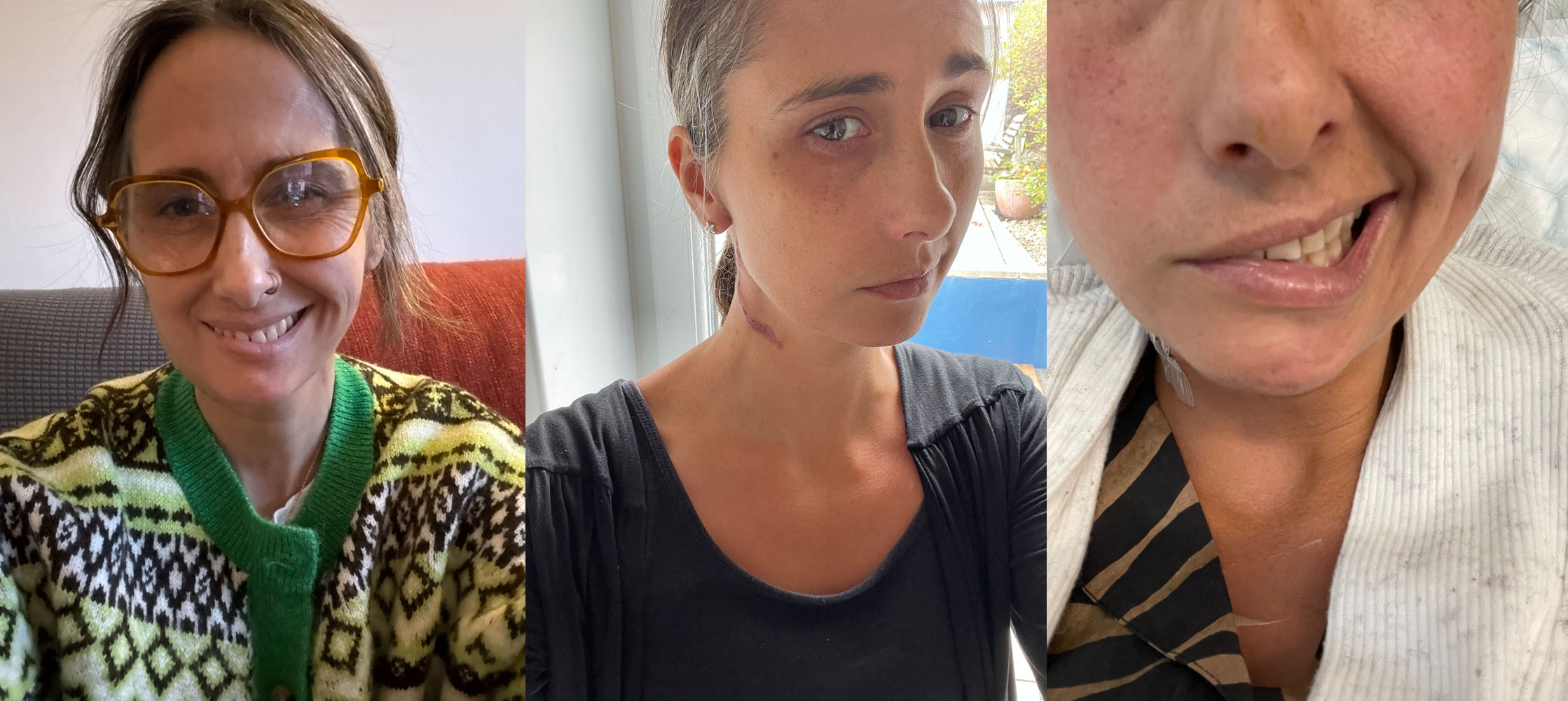
When I awoke from the second surgery my eye wouldn’t close and the right side of my mouth was paralysed. It took five months for my blink to return, and some sort of a smile – though never back to how it was.
In the meantime my scar grew and grew. As it grew, the pain in my jaw and face got worse and worse until I couldn’t chew. I experienced stabbing pains through my ear, my eye socket and teeth. The pain was horrendous.
Six weeks ago I had reconstructive surgery. My incredible surgeons removed the scar tissues and created a new pathway for the facial nerves with muscle from my thigh. The signs are looking good in terms of pain reduction, but my facial palsy is worse again. My eye closure is temperamental, my smile very wonky and my forehead – well, it certainly won’t do as it’s told. I had completed an excellent course of therapy in which I had finally accepted my facial palsy. So taking the risk of making it worse again was huge, but I couldn’t live with the pain.
Although I know I made the right choice, living in a world that is so obsessed with beauty standards, especially (I feel) for my age group, is really hard. I don’t care about wrinkles, some age lines. I’d just like to be able to blink properly and smile! A big old beaming smile, like the one I had before cancer.
Disclaimer: Please note that views expressed are person’s own and should not be considered a recommendation of particular medical treatments, therapies or surgeries. We would always advise you seek advice from a health professional with experience in facial palsy who can assess your individual needs.