
Natalie developed Bell’s palsy just days after giving birth and shared her experience with Facial Palsy UK.
I’m Natalie, I’m 28 years old and live in Northamptonshire. Three days after giving birth by c-section I developed Bell’s palsy. I first noticed that my lips felt weird and were tingling, as the day went on my speech started to get impaired. Because I have a lazy eye I hadn’t noticed that it wasn’t shutting when I blinked. I rang 111 and they sent out paramedics who took me to A+E. My newborn son travelled separately with my husband and mum. It was the first time we’d been separated and while I was waiting for them to join us at the hospital I was desperate to have him in my arms again.
A prominent local person had sadly died in A+E that day and hundreds of people were coming and going through A+E to pay their respects. I remember lying on a trolley in the corridor, in pain from the c-section and breastfeeding my son. I felt so exposed and vulnerable due to there being just so many people moving about in the small space. I don’t remember ever feeling concerned about myself or what had happened to my face, I was just grateful that it was me and not my baby. My focus was on him and I think I also felt a bit numb. It wasn’t until afterwards that I realised people had been worried that I might have had a stroke. The A+E consultant confirmed it was Bell’s palsy and sent me away with some prednisolone (steroids) and tape to tape my eye shut at night.
By the end of the day the left side of my face was completely paralysed, my eye couldn’t close and I couldn’t eat, drink or speak properly.

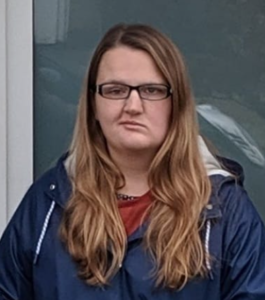
Natalie with Bell’s palsy
Those first few days and weeks of my life as a mum were exhausting, emotional and challenging. I was in agony from the c-section and couldn’t take strong painkillers because I was breastfeeding. I’ll never forget how awful it felt to cry with facial paralysis, it was painful and uncomfortable and felt claustrophobic. I thought it was cruel that I couldn’t even cry properly which made me want to cry more!
 I found the information available from the NHS on Bell’s palsy really poor but luckily I found Facial Palsy UK where I learnt about the important facial exercises and massage techniques and about silicone tape being much gentler on the delicate skin around the eye. I desperately searched for recovery statistics and was terrified that I wouldn’t recover. I promised myself if I did recover I would love my face forever.
Having a newborn is a time that you usually take lots of photos but I hated my face and hated how sad it made me look, especially when I was holding my beautiful baby who made me so happy. I remember worrying that when my son was older he’d see the photos and think I was unhappy. Although I felt self-conscious I wanted to make sure we carried on taking photos and when I look back now I’m glad I did.

Natalie now
I think being a new mum gave me extra strength as I knew that whatever happened I would have to keep going and that I couldn’t shy away from the world. I pushed myself to get out and about and although I felt really conscious eating and speaking in public I’m so glad I did it. I did all the recommended massaging and facial exercises and after three weeks I starting getting real progress with my recovery.
17 months later, my face is mostly back to normal, it’s less symmetrical than it was but it’s only obvious to me and I am so grateful for the recovery I’ve made. I have some synkinesis where my eyelid drags down when I move my mouth in certain ways or flare my nostrils but for me it just serves as a reminder for me to live life to the full and take nothing for granted because you just don’t know what’s round the corner. I still get severe pain on the affected side of my face sometimes, usually when I am tired or stressed or have done too much. I treat it with heat and painkillers and see it as a lesson to slow down. I think I will always live in fear of developing the facial paralysis again but I know that if it does happen I’ll have the strength to deal with it.
Disclaimer: Please note that views expressed are person’s own and should not be considered a recommendation of particular medical treatments, therapies or surgeries. We would always advise you seek advice from a health professional with experience in facial palsy who can assess your individual needs.