
Rebecca shares her recovery story to give others hope. She took eight weeks to recover and has just a few residual effects.
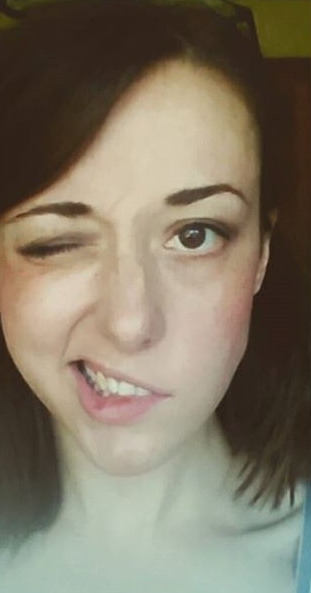
Two weeks after diagnosis
I was 23 when I woke up one Saturday morning in July 2015 with the left side of my face paralysed. The day before had been very hot and I’d had a stressful day at work. I remember an odd feeling in my lips when I tried to put some lipstick on and the bizarre feeling that they didn’t quite meet properly. On the train into Manchester I even considered getting off a few stops early and going to the hospital, but I told myself I was being silly and it was probably just the hot weather making me feel a bit funny. On the Saturday morning, I tried to drink some water and it all came slopping out of my mouth. I looked in the mirror and the entire left side of my face wasn’t moving. I couldn’t smile, close my eye or wrinkle my forehead. Panicking, I rang 111 thinking I was having a stroke. The operator referred me to my out-of-hours GP surgery where I was diagnosed with Bell’s palsy. The doctor told me it could last anywhere from a few weeks to over a year, prescribed me some steroids and sent me on my way.
I had to take two weeks off work as my job was in customer service and I couldn’t speak properly. I cried a lot and I didn’t leave the house much as I felt people would stare at me. I had never suffered from any visible ailment before and suddenly realised how brave the people who do are to carry on with their day-to-day lives – I spent most of the two weeks in my room staring into a mirror and desperately trying to make my face move. I got an eye-patch to help me sleep at night, drank everything through a straw and struggled to eat properly. I spent hours trawling the internet for recovery stories and speaking to people on Instagram who were also affected. The biggest worry I had was that I was going to New Zealand for a year in September, which was only three months away. I couldn’t imagine going to a different country and meeting new people when my face looked the way it did, and I was worried about having to pay for any medical costs while I was over there. I’d been looking forward to it for months and now I was contemplating cancelling my flights.
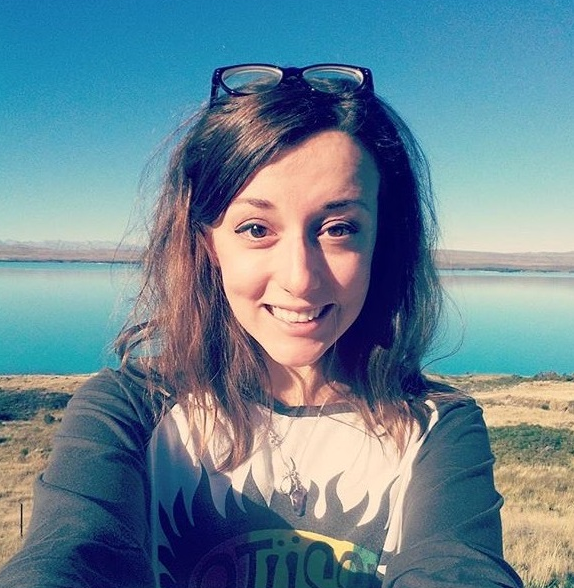
9 months after Bell’s palsy
The recovery period can be anywhere from 2-3 weeks to over a year and I was very lucky: around four weeks after the onset, I very slowly started to regain movement. The first was a very tiny twitch in the corner of my mouth. I was so happy to see any movement at all that I burst into tears. It took around eight weeks in total to get back to ‘normal’. However, due to my constant attempts at forcing my face to move, I’ve ended up with some synkinesis – my cheek lifts when I close my eyes, I get a twitch in my left eye when I smile, eat and brush my teeth, and, ironically, I now have excessive movement in the previously paralysed side. No one notices, not even when I point it out (although I do suspect they’re being polite!), but it does still get me down occasionally, especially when I see photos of myself and I can really see that my face is noticeably unsymmetrical. However, I met my boyfriend in New Zealand and he’s only ever known me with this face, so I take some comfort in that!
I hope in the future there is more research into why Bell’s palsy occurs and developments of treatments. The suddenness of it and the lack of information on a cause and treatments was distressing and made me feel completely helpless. I would recommend talking to people online; I found Instagram to be a really supportive community with people offering advice and sharing before/after photos which made me hopeful for a recovery. It also made me realise that while my experience was upsetting and distressing for me, I was lucky and had quite a quick recovery time. It reminded me to not place so much importance on how I, or anyone else, looks and to be grateful for good health.
Disclaimer: Please note that views expressed are person’s own and should not be considered a recommendation of particular medical treatments, therapies or surgeries. We would always advise you seek advice from a health professional with experience in facial palsy who can assess your individual needs.