
Now 62, Sarah was left with facial paralysis after having surgery to remove a tumour. Three decades later, she explains how the recent encounter with other people affected with facial palsy has finally helped her come to terms with her new face.
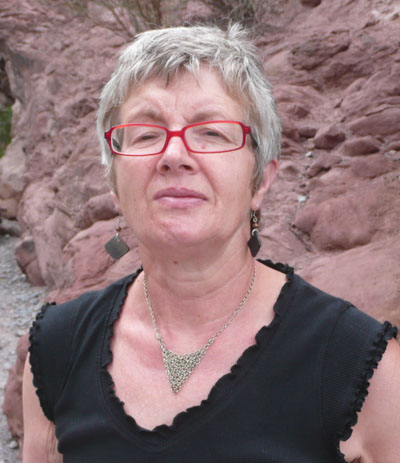
Sarah now
My story is thirty years old, and therefore I have had a long time to get used to having a facial palsy. I had a successful career in the NHS and am happily married with two now grown-up children. Yet, not a day went by when the fact of having a face that won’t do what I want it to continued to bug me.
When I was 32 and my children were five and four, I was diagnosed with an acoustic neuroma – a slow-growing tumour on the nerve that connects the ear to the brain. After the operation to remove the tumour, I can remember that ‘mirror moment’ when I woke up to find that my face had altered, and feeling devastated with what I saw. It was a time of mixed emotions because, as a nurse working with people who were at the end of their lives, I felt grateful that I was not going to die, and then I felt very sad about the way I looked – and then I felt guilty that I was so vain.
I was fortunate that I had a surgeon who had enough knowledge to give me a glossopharyngeal transplant, which at least helped lift my paralysed side. At that time there was no follow-up, except to check on the successful removal of the tumour two and five years later, and I was discharged.
In the intervening years, I have exhibited the same behaviours that many people with a facial palsy or disfigurement show. I hate having my photo taken; you cannot see my face because of my hat at my daughters’ wedding; I dislike going to the hairdresser’s, and cover my face when laughing. My eye tears up easily and I cough and splutter if I don’t eat at a snail’s pace. However, more than that it affected how I felt about myself: as an invalid, as an imperfect human being, and quite on my own dealing with these emotions. I was very good at hiding this from my family and friends, and on the surface I got on with life.
A few years ago I read an article in a paper with a story of someone else who had had a similar experience. I joined a self-help group five years ago, and through that found out that there were local services that could help. There was in fact a whole team set up for people who have a facial palsy. The experience of being taken seriously and the interest shown in my face helped me realise that I wasn’t just being vain, and now I feel more at home with how I look. Thirty years on, I have learnt to love myself and my face.
However, for many people who are born with or acquire a facial palsy, the level of care is not much different from what I experienced thirty years ago. You can’t deny that a postcode lottery does exist for facial palsy, and I feel passionate about making sure that GPs and hospital consultants know where and how to refer people. I also want the whole medical team to offer support and be sensitive about that mirror moment when your whole body image alters, and help you start the long process of learning to love your face again.
Update
Sarah was featured in Yours magazine in February 2013 discussing life with facial palsy after acoustic neuroma surgery.
Sarah is also our Patient Representative on the Facial Palsy UK Medical Advisory board.
Disclaimer: Please note that views expressed are person’s own and should not be considered a recommendation of particular medical treatments, therapies or surgeries. We would always advise you seek advice from a health professional with experience in facial palsy who can assess your individual needs.