
Patient experience
People with facial palsy are at higher risk of exposure keratitis because the eye may not blink or close fully. This can lead to severe dryness, corneal damage, and intense pain. My experience showed how easily this can be misdiagnosed as conjunctivitis—and why that matters.
My left eye does not blink or close fully because I was born with facial palsy. In October 2024, it became scratchy and red. It was uncomfortable but manageable. I was about to go on holiday to Lanzarote, so I bought over-the-counter antibiotic eye drops in case it turned into an infection. I already used eye ointment and gel regularly because of my facial palsy.
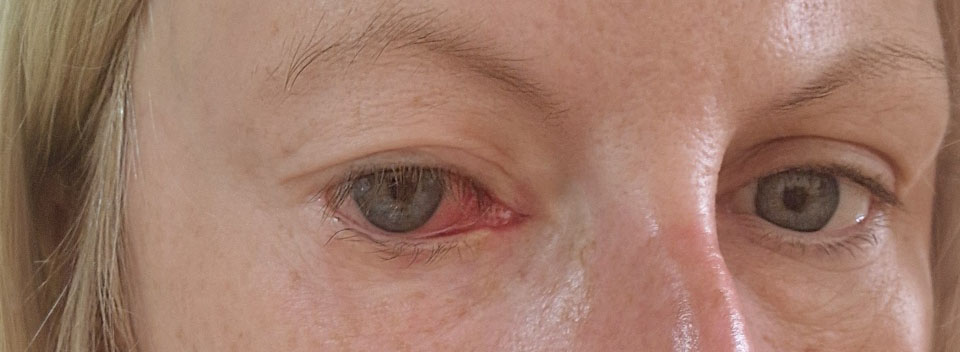 While I was away, it stayed bothersome but tolerable. After the flight home, however, it became much worse—probably because of four hours in an air-conditioned plane. I had previously had a punctal plug inserted, and I thought it might be scratching my eye. I phoned my optician to ask for help, but they said it was too specialist and that I needed to speak to my GP.
My GP said they would make an urgent referral to ophthalmology, but when I chased this, ophthalmology had no record of it.
 By this point, I was in considerable pain. I remember going out one weekend with my left eye taped shut because I could not tolerate having it open. I eventually went to a Minor Injuries Unit. I was seen by a registrar from the ophthalmology team, who diagnosed viral conjunctivitis and said it would spread to my right eye. He told me the punctal plug was no longer there, so that was not the cause. I was prescribed steroid eye drops but was not given much more information.
The pain continued and did not improve—and it did not spread to the other eye. That made the diagnosis feel wrong. I also found it very difficult to find information about how conjunctivitis might present in someone with a non-blinking eye, compared with someone whose eyes function normally.
I then went to a different walk-in centre, where I was told I would have to wait another couple of days to see an eye specialist. They suggested the Minor Eye Conditions Service (MECS) as a faster route. When I looked this up, it turned out to be my own optician—the same one who had already said my problem was too specialist for them.
By now, the pain was severe and was keeping me awake at night.
When I finally saw an eye specialist at my local hospital, I was diagnosed with exposure keratitis. My cornea was ulcerated, which explained the level of pain I was in. The cause was dryness and exposure due to my facial palsy and incomplete eyelid closure. I was prescribed antibiotic and steroid eye drops for at least a month and was told to increase my usual eye lubrication to hourly. The condition eventually cleared, but it deeply worried me how easily someone with facial palsy could be misdiagnosed with viral conjunctivitis.
What I have learned
- About MECS (Minor Eye Conditions Service):
MECS is a relatively new NHS service that allows opticians and optometrists to assess minor, recent eye problems such as red or painful eyes, irritation, discharge, or a foreign body in the eye. It is available in some, but not all, parts of the UK. Importantly, the Association of British Dispensing Opticians (ABDO) states that MECS is not suitable for people who are already having eye conditions treated or monitored at hospital—which I was, just not locally. I also could not drive to my usual hospital. In my case, my optician was probably right to say they were not the right service to manage this. - Assume exposure keratitis first in a very painful, non-blinking eye:
After speaking to experts at Facial Palsy UK, I learned that where there is severe eye pain in someone with facial palsy, it is safer to assume exposure keratitis until proven otherwise. Exposure keratitis needs prompt treatment to prevent corneal scarring, ulcers, infection, and potential vision loss. - Increase lubrication early and use preservative-free products:
If you have facial palsy and develop any eye irritation, increase your usual lubrication immediately and make sure it is preservative-free. Speak to your specialist as soon as possible for advice. - Do not delay expert treatment:
Severe eye pain in a non-blinking or poorly closing eye is not something to “wait and see.” Delay can mean real damage to the cornea and long-term consequences for vision.
Last reviewed: 26-02-2026 || Next review due: 26-02-2028